
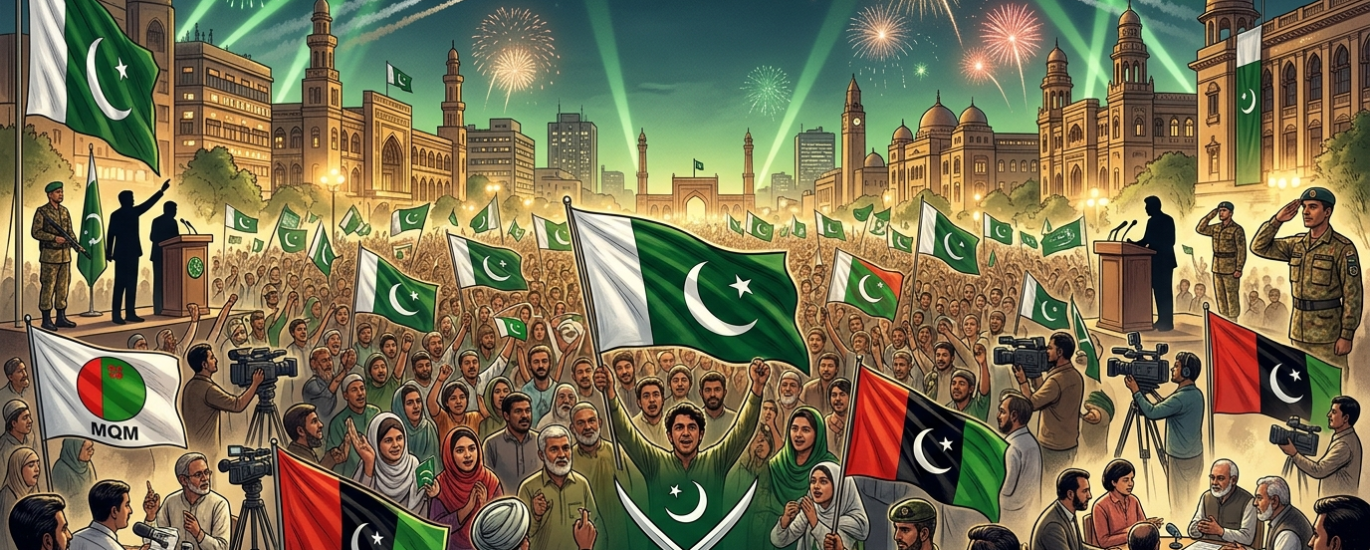
The Marka-e-Haq celebrations emerged as more than a ceremonial political gathering; they represented a national acknowledgment of the courage, professionalism, and sacrifice demonstrated by Pakistan’s armed forces in safeguarding the sovereignty and territorial integrity of the country. At a time when regional tensions continue to test diplomatic maturity and national resilience, the defensive institutions of Pakistan once again reinforced public confidence through their unwavering commitment to the nation’s security.
Such moments carry significance beyond politics. They remind the nation that while governments change, political alliances evolve, and ideological rivalries persist, the protection of Pakistan remains a collective responsibility shared by every institution, political party, and citizen alike. The celebrations, therefore, should have served not only as a tribute to the armed forces but also as a demonstration of democratic unity within Sindh’s increasingly polarized political environment.
In this regard, a merged and collectively organized celebration involving both the ruling Pakistan Peoples Party (PPP) and the opposition Muttahida Qaumi Movement (MQM) could have delivered a far stronger national message. It would have reflected political maturity by affirming that, despite disagreements inside the Sindh Assembly, contrasting narratives surrounding Karachi’s governance, and the longstanding rhetoric of political division, the opposition and the government stand united when the discussion concerns the sovereignty, dignity, and integrity of Pakistan.
Such symbolism matters in democratic societies.
The public often witnesses relentless political confrontation, accusations, and institutional friction between rival parties. Consequently, moments of national significance become opportunities to reassure citizens that political competition does not eliminate patriotism or institutional respect. A unified celebration would have projected the idea that while political forces may oppose one another legislatively, they remain collectively committed to honoring the sacrifices of the armed forces and defending the national interest above partisan considerations.
However, despite the broader atmosphere of patriotism and solidarity, internal political undercurrents within the ruling party remained evident.
While the Chief Minister of Sindh led the Marka-e-Haq celebrations with visible administrative authority and political confidence, the absence of the provincial president of the party’s political wing became a matter of considerable political observation. Simultaneously, the presence of the general secretary standing alongside the Chief Minister added another layer to the political optics surrounding the event.
In Sindh’s political landscape, symbolism often communicates more than official statements.
Previously, political circles and media discussions had highlighted reports of acrimony between the Chief Minister and the provincial president. Although those differences appear to have gradually subsided with the passage of time, their political memory continues to shape public interpretation of every major appearance and organizational decision. Politics rarely functions in absolutes; controversies are not always eliminated, but often strategically neutralized for the sake of institutional continuity and party discipline.
Despite enduring criticism over governance-related concerns, the Chief Minister has demonstrated significant political resilience. Allegations regarding administrative inefficiency, infrastructure failures, urban mismanagement, and governance shortcomings have consistently placed the provincial administration under public scrutiny. Nevertheless, the Chief Minister has managed to maintain both administrative continuity and political relevance at a time when many anticipated growing instability within the ruling structure.
Particularly noteworthy has been his financial management and ability to sustain governmental functionality amid intense political criticism. In a province where fiscal administration directly influences development projects, political alliances, and institutional coordination, maintaining operational stability is itself a considerable political achievement.
More importantly, the Chief Minister appears to have succeeded in neutralizing several internal political tensions within the party. Earlier discussions regarding a possible change in Sindh’s leadership gradually faded, largely because the existing leadership structure managed to preserve organizational equilibrium. Political leadership ultimately values stability, especially when internal fragmentation risks weakening the party’s administrative control and electoral standing.
However, political stability alone cannot ensure long-term democratic sustainability.
As the constitutional head of the province, the Chief Minister now faces a broader challenge: ensuring neutrality, transparency, and inclusiveness within the party’s internal governance structure. Expectations from party workers, legislators, and political observers extend beyond survival politics. They expect equitable developmental distribution, balanced political representation, and institutional fairness among party members belonging to varying camps and influence groups.
This challenge becomes increasingly sensitive when individuals previously associated with internal political conflicts against the Chief Minister appear to receive political accommodation or advancement, while several loyal and neglected party members continue to feel politically marginalized. Such perceptions, if left unaddressed, gradually weaken organizational cohesion and foster silent dissatisfaction within political structures.
Strong leadership is measured not merely by political survival, but by the ability to transform rivals into collaborators without creating resentment among loyalists.
Simultaneously, the Sindh Government continues to face severe criticism over governance issues across the province. Urban deterioration, infrastructure deficiencies, sanitation concerns, water shortages, and administrative inefficiencies have collectively strengthened the opposition’s narrative ahead of the upcoming local body elections. Opposition parties are expected to aggressively capitalize on public grievances and position themselves as alternatives to the existing administrative structure.
Furthermore, controversies involving political figures accused in cases related to honor killings, narcotics, corruption, and abuse of influence continue to affect the credibility of the government. Public confidence in democratic institutions weakens whenever accountability appears inconsistent or politically selective.
In this context, the Provincial Home Minister’s response to honor-killing cases and his commitment to reviewing and strengthening existing legal frameworks represented an important institutional acknowledgment. Legal reform remains necessary not only for deterrence but also for restoring public trust in governance mechanisms. However, legislative promises must eventually translate into visible implementation if governments wish to preserve credibility.
At the same time, it is equally important to recognize that the ruling party itself carries a historical legacy of sacrifice. Several former leaders associated with the party lost their lives while struggling for democratic continuity and public representation. Their sacrifices continue to shape the party’s political identity and moral legitimacy. That legacy, therefore, imposes a greater responsibility upon the current leadership to prioritize institutional integrity, democratic inclusiveness, and transparent governance.
Another dimension complicating Sindh’s political environment is the growing perception surrounding potential contenders for the future Chief Minister. Several political figures discussed within these circles remain surrounded by controversies of their own, including concerns regarding administrative capability, political consistency, and internal management failures.
The criticism directed towards the Public Accounts Committee chairman for failing to effectively retain and defend his assistant team further intensified these debates. Consequently, the public now observes two parallel political narratives unfolding simultaneously.
On one side, there is visible harmony, carefully projected through joint appearances, organizational coordination, and strategic silence. On the other side, sections of the public, intellectuals, and political analysts perceive these developments as tactical efforts designed to politically contain potential challengers while strengthening the Chief Minister’s position within the party hierarchy.
Whether accurate or not, such perceptions carry political consequences.
This is precisely why the Chief Minister’s role at this stage becomes exceptionally important. If the objective is genuine institutional stability and sustainable democratic growth within the party, then collaborative political accommodation must replace perceptions of strategic exclusion. Rather than allowing narratives of political sidelining to intensify, the leadership should actively promote capable individuals irrespective of past internal disagreements.
Political strength does not emerge from suppressing potential competitors; it emerges from creating a leadership culture capable of accommodating diverse political voices while maintaining institutional unity.
Sindh, particularly Karachi, urgently requires such democratic maturity. The province has endured decades of political fragmentation, administrative confrontation, ethnic polarization, and governance-related disputes. The public no longer seeks performative political rivalries; it seeks functional governance, institutional coordination, and political seriousness.
This is why the broader symbolism surrounding the Marka-e-Haq celebrations remains deeply significant. National unity should not remain confined to ceremonial gatherings or moments of external tension alone. It should evolve into a democratic principle where political rivals understand that patriotism, institutional respect, and public welfare transcend electoral competition.
The armed forces fulfilled their responsibility by defending Pakistan’s borders with discipline and sacrifice. The responsibility now rests upon political leadership to defend democratic stability with equal maturity, wisdom, and inclusiveness.
Ultimately, the true strength of Sindh’s political leadership will not be measured solely through electoral victories or internal power consolidation. It will be measured through its ability to cultivate political harmony without eliminating democratic competition, and institutional unity without suppressing dissent.
When political rivals learn to collaboratively protect the collective interests of the province while preserving their democratic identities, they leave behind not merely political victories but a lasting legacy of statesmanship.