Pakistan’s Emerging Geopolitical Reality
South Asia’s strategic landscape has undergone a visible transformation over the past year. Recent military tensions between Pakistan and India, coupled with evolving regional diplomacy and shifting international alignments, have altered the discourse surrounding Pakistan’s position in global affairs.
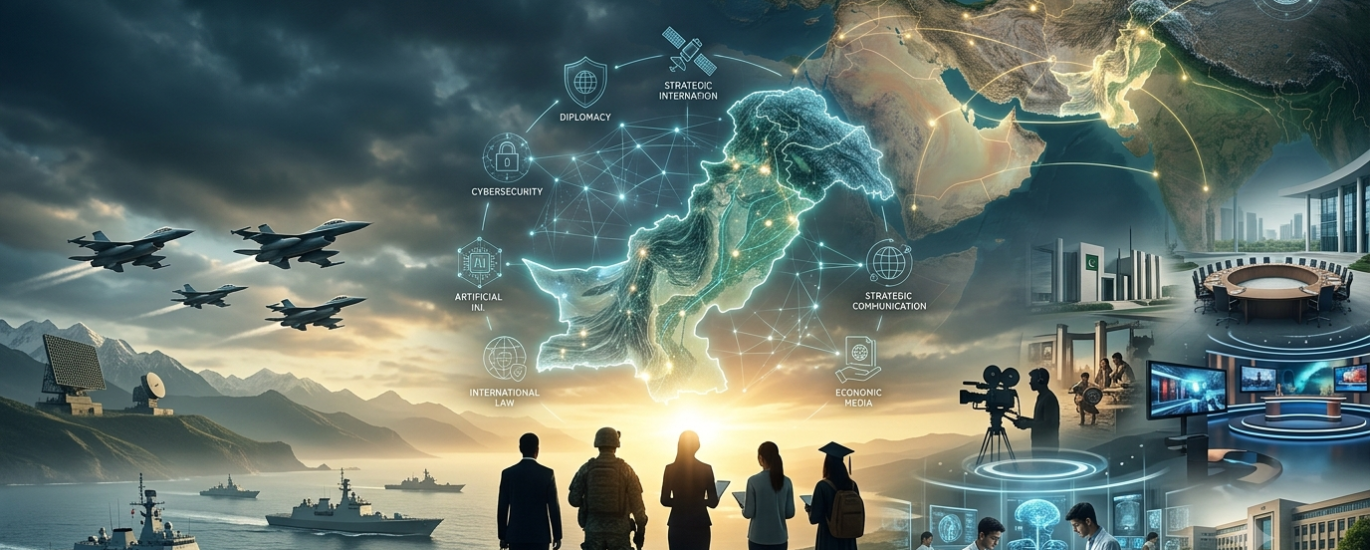
Whether viewed through the lens of deterrence, diplomacy, or strategic communication, one reality has become increasingly apparent: the contest between India and Pakistan is no longer confined to conventional battlefields. It now encompasses diplomacy, information, culture, economics, and international perception.
Pakistan’s military leadership has emerged with renewed confidence following the recent crisis with India. Supporters argue that the country’s military preparedness and response reshaped regional calculations and contributed to a broader reassessment of Pakistan’s strategic relevance.
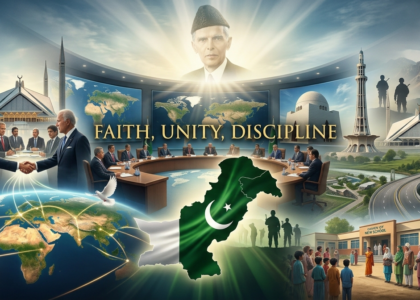
This perception, combined with Pakistan’s subsequent diplomatic engagement—including its role in facilitating communication during heightened tensions involving the United States and Iran—has encouraged many observers within Pakistan to describe a shift from the long-cited narrative of “beggars can’t be choosers” toward one of a country aspiring to act as a regional interlocutor and mediator.
Yet military confidence alone cannot sustain geopolitical influence. History consistently demonstrates that durable regional stability requires political engagement alongside strategic preparedness.
Politics Beyond Military Deterrence
That lesson becomes particularly relevant when examining the future of the Indus Waters Treaty. Since its signing in 1960, the treaty has survived wars, military crises, and prolonged political hostility. Likewise, the Simla Agreement, negotiated by Zulfikar Ali Bhutto and Indira Gandhi in 1972, established the principle that disputes between India and Pakistan should primarily be resolved through peaceful bilateral engagement.
Although recent disagreements have placed unprecedented pressure on the treaty framework, the broader lesson remains unchanged: military deterrence may prevent escalation, but political dialogue remains indispensable for lasting conflict management.
Interestingly, political channels between the two countries have never disappeared entirely. Historical personal rapport between Mian Nawaz Sharif and Narendra Modi, as well as the longstanding political familiarity between the Pakistan Peoples Party and the Nehru–Gandhi family, illustrates that political communication has often survived periods of institutional tension.
Such relationships have not resolved structural disputes, but they underscore an important reality: diplomacy is frequently sustained by political trust built over decades rather than by crisis management alone.
This duality defines the present geopolitical environment. On one side stand voices advocating political consensus, confidence-building measures, and institutional dialogue as the only sustainable path toward resolving disputes over Kashmir, terrorism, trade, and shared water resources.
On the other side stand advocates of a more assertive strategic posture, arguing that issues such as the Indus Waters Treaty represent matters of national security requiring legal preparedness, diplomatic mobilization, and credible deterrence.
These approaches need not be mutually exclusive. Pakistan’s challenge is to preserve its treaty rights through international law while simultaneously maintaining political avenues for dialogue. Strategic resilience and diplomatic engagement are complementary rather than contradictory instruments of statecraft.
The Information Front: Winning the Battle of Narratives
However, the contest between India and Pakistan extends well beyond diplomacy and military affairs. It has increasingly evolved into an information war.
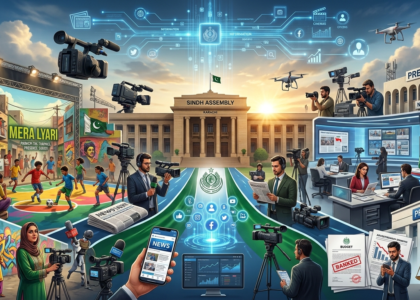
Narratives now compete as intensely as armies. Public perception has become a strategic domain where films, digital media, documentaries, television programming, and social media campaigns shape international understanding of both countries.
India’s growing investment in cinema as an instrument of strategic messaging illustrates this reality. Film productions such as Dhurandhar contribute to narratives that portray Pakistan through the lens of security threats and instability.
Pakistan has begun responding through its own cultural initiatives. One notable example is Mera Lyari, supported by the provincial Senior Minister Sharjeel Inam Memon and the Sindh Information Department, which seeks to present a different image by highlighting resilience, diversity, and the social realities of one of Karachi’s most misunderstood localities.
Regardless of artistic interpretation, such projects demonstrate an increasing recognition that national image is no longer constructed solely through diplomatic communications but also through storytelling, culture, and media.
This emerging battlefield of narratives carries important implications for public institutions. Information departments can no longer be viewed merely as arrangements responsible for publicity.
They are evolving into instruments of strategic communication capable of projecting national identity, countering disinformation, and strengthening cultural diplomacy. In an era of hybrid warfare, information itself has become an element of national security.
Political Stability as a Strategic Asset
Yet while Pakistan’s external geopolitical posture appears to be evolving, its domestic political reality remains familiar.
Coalition partners continue to cooperate in governance while simultaneously competing in the political arena. The recent federal and provincial budget sessions revealed ideological differences, competing priorities, and occasional public acrimony between coalition allies.
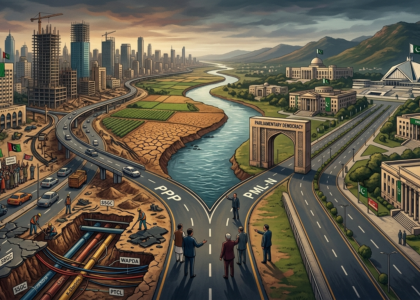
Nevertheless, the functioning of parliamentary democracy requires precisely this balance between disagreement and cooperation.
The recent elections in Gilgit-Baltistan demonstrated how coalition partners can become electoral competitors without necessarily undermining broader governmental stability. Similar dynamics are likely to emerge during the forthcoming elections in Azad Jammu and Kashmir, where established political parties, including the participation of figures such as Faryal Talpur, will vigorously contest for public support.
Election campaigns will undoubtedly produce sharp rhetoric, criticism, and partisan confrontation. Such competition is an inherent feature of democratic politics rather than evidence of institutional breakdown.
The more important question is what follows the election.
Pakistan’s democratic maturity will not be measured by the intensity of campaign speeches but by the willingness of political wings to return to governance, cooperation, and constitutional continuity once electoral contests conclude.
Political competition must remain temporary; national cohesion must remain permanent.
The evolving geopolitical environment demands precisely such maturity. Military preparedness, diplomatic engagement, legal advocacy, information strategy, and political stability are no longer separate domains.
They have become interconnected components of comprehensive national power.
Pakistan’s recent international visibility offers an opportunity to redefine its global role. Yet sustaining that momentum will require more than battlefield success or diplomatic symbolism.
It will require political consensus within political partnerships, institutional continuity, responsible strategic communication, and the confidence to compete not only across borders but also within the global marketplace of ideas.
The future contest between India and Pakistan is unlikely to be decided solely by military capability. It will increasingly be determined by diplomacy, international law, economic resilience, cultural influence, technological innovation, and the credibility of competing narratives.
Nations that succeed in this new environment will be those capable of integrating hard power with soft power, deterrence with dialogue, and national security with democratic stability.
In this changing strategic landscape, Pakistan’s greatest challenge is not merely defending its borders. It is sustaining a national consensus capable of transforming geopolitical opportunity into long-term strategic advantage.
Preparing the Next Generation for Strategic Competition
Syed Murad Ali Shah’s initiative to establish the Google Gemini Centre at NED University, coupled with his assertion that “The youth are the future; all we need to give are the skills and the opportunity to grow,” reflects the Sindh Government’s commitment to preparing young people for the demands of an increasingly technology-driven economy.
The initiative demonstrates a policy direction focused on expanding access to emerging technologies, fostering digital skills, and creating equitable opportunities for students to participate in the rapidly evolving global technology landscape.
By investing in AI-focused education and innovation, the government seeks to position Sindh’s youth not merely as consumers of technology, but as future contributors to the digital economy.
Beyond Mediation: A New Chapter in Pakistan-Iran Relations
Pakistan’s growing diplomatic engagement with Iran reflects its commitment to regional stability while maintaining a balanced foreign policy.
The participation of Pakistan’s civil and military leadership—including the Prime Minister, Field Marshal Syed Asim Munir, Bilawal Bhutto Zardari, Mohsin Naqvi, and Sindh Chief Minister Syed Murad Ali Shah—in the funeral ceremony of Iran’s Supreme Leader symbolized the continuity of Pakistan-Iran relations during a sensitive geopolitical period.
While Pakistan values its strategic partnership with the United States, Iran remains an indispensable neighbour linked through history, culture, religion, and geography. Islamabad’s evolving role as a regional mediator demonstrates that constructive relations with both countries are essential to safeguarding Pakistan’s national interests.
Beyond official diplomacy, the memorial dedicated to the children of Minab at Tehran Airport served as a poignant reminder of the human cost of conflict.
It resonated deeply with many Pakistanis, reflecting shared compassion for innocent civilians affected by war.
Previously, Provincial diplomacy has also strengthened bilateral ties.
Visits by Sindh government representatives, including MPA Sohrab Khan Sarki, have promoted cooperation in development, culture, and governance, complementing Pakistan’s broader diplomatic efforts.
Historical Continuity and the Future of Pakistan-Iran Relations
However, the future of Pakistan-Iran relations should extend beyond political and military engagement.
Establishing youth summits, academic fellowships, university exchanges, and cultural programs would enable young Pakistanis and Iranians to build lasting connections and mutual understanding.
Strengthening people-to-people relations alongside diplomatic cooperation will ensure that the historical bonds between Islamabad and Tehran continue to evolve into a durable partnership capable of withstanding future regional challenges.
The resilience of Pakistan-Iran relations is also reflected in high-level diplomatic engagements over the years.
During President Asif Ali Zardari’s visit to Tehran in 2011, he met with Iran’s Supreme Leader, Ayatollah Ali Khamenei.
While the detailed substance of their discussions was not made public, the official statement issued by the Rahbar’s office reaffirmed the importance of the two countries’ “historical, cultural, and religious bonds” and emphasized the need to further strengthen cooperation across political, economic, and regional spheres.
Although the meeting remained largely confidential, its significance lay in reaffirming a long-standing understanding that Pakistan and Iran, as neighbouring states with deep civilizational ties, share an interest in maintaining dialogue despite changing regional dynamics.
More than a decade later, that message continues to resonate as both countries seek to build relations based not only on strategic necessity but also on mutual respect, regional stability, and sustained diplomatic engagement.