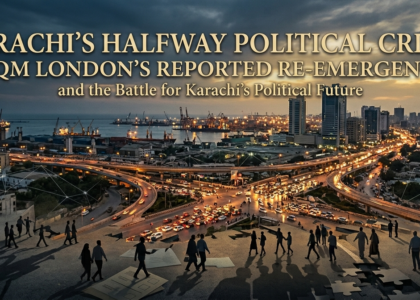
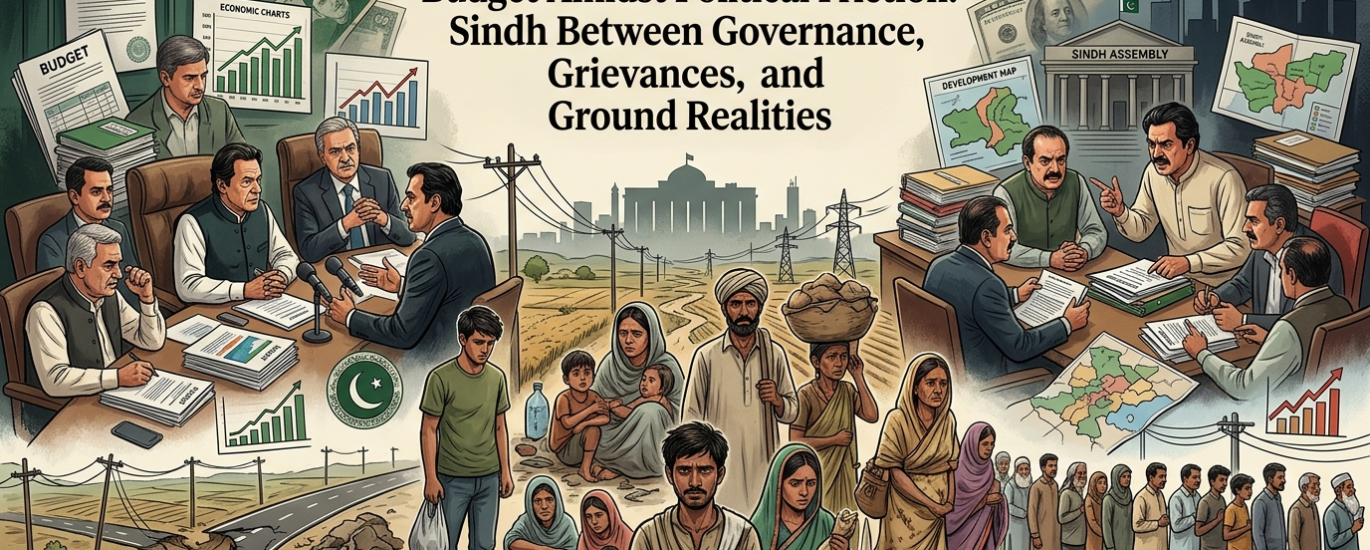
The politics of budgets in Pakistan has never remained confined to financial spreadsheets, development allocations, or bureaucratic planning. Budgets, particularly in Sindh, often become reflections of political trust, administrative priorities, institutional conflicts, and the widening gap between promises and implementation. The ongoing internal crisis within the ruling political structure in Sindh, combined with tensions between the federation and the province, has once again transformed the budget debate into a larger conversation about representation, governance, and political survival.
At a time when Pakistan continues to navigate economic uncertainty, diplomatic responsibilities, inflationary pressure, and regional security concerns, Sindh stands at a politically sensitive crossroads. The province faces criticism from opposition parties, discontent among government employees, frustration in rural communities, and increasing scrutiny over development priorities. The real question, however, is not merely about numbers in a budget book. It is whether the present political leadership can rebuild public confidence while balancing governance, economic hardship, and political instability.
Before discussing budgets, politics, or governance failures, it is important to acknowledge the sacrifices rendered by Pakistan’s armed forces in defending national sovereignty and preserving internal stability. Every martyr who laid down his life for the country deserves collective prayers and national recognition. Their sacrifices transcend political affiliations and provincial divisions.
The recent tensions between India and Pakistan once again demonstrated Pakistan’s strategic resilience, diplomatic maturity, and institutional preparedness. Beyond military preparedness, Pakistan’s growing recognition as a mediator in regional and global conflicts has strengthened its diplomatic standing internationally. Such recognition carries significant responsibility and also demands internal political stability.
Unfortunately, while the state projects strength internationally, domestic political fragmentation and provincial grievances continue to weaken national cohesion internally. No diplomatic achievement can sustain itself if provinces feel politically alienated or economically neglected.
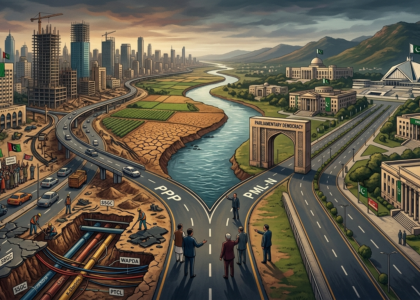
One of the most alarming features of Pakistan’s governance structure is the recurring hostility between provincial and federal administrations regarding development budgets. Instead of cooperative governance, both sides often engage in political point-scoring that directly impacts ordinary citizens.
Sindh repeatedly raises concerns regarding delayed fund releases, reduced allocations, or unequal development treatment. On the other hand, the federation accuses provincial authorities of poor governance, corruption, and administrative inefficiency. While both sides continue their political narratives, development projects remain stalled, incomplete, or selectively prioritized.
The concentration of fiscal powers within the provincial hierarchy has created a governance model where districts are compelled to wait for approvals, discretionary grants, and politically influenced allocations. This not only delays development but also alienates citizens from the governance process itself. The people at the district and municipal levels must feel that they possess both responsibility and ownership in shaping their local infrastructure, civic facilities, and developmental priorities.
According to Sr. Analyst & journalist Rafiq Ahmed Bhutto’s opinion as he stated “the ongoing local government reforms in Sindh remain incomplete without granting genuine autonomy to Union Councils, Town Committees, and Municipal Committees. These institutions must function independently, similar to provinces, through empowered District Financial Commissions (DFCs). However, despite discussions on reforms, the establishment of autonomous DFCs is absent from the government’s agenda, largely due to the provincial leadership’s reluctance to transfer financial authority to districts. Centralized control weakens participatory governance and delays development. Constituting DFCs is therefore essential to ensure fiscal decentralization, strengthen accountability, and allow citizens to actively contribute towards local development and infrastructure maintenance.”
The tragedy is that the victim of this acrimony is neither the federation nor the province — it is the common taxpayer. Roads remain broken, drainage systems collapse during monsoons, healthcare facilities remain understaffed, and educational institutions continue deteriorating.
Development budgets should never become political weapons. Unfortunately, in Pakistan, they often become instruments for political bargaining rather than public welfare.
A growing perception within Sindh is that the province is being politically cornered while certain federally aligned political narratives are being strengthened. Whether this perception is entirely accurate or politically exaggerated, it cannot simply be dismissed because public sentiment itself shapes political realities.
Many within Sindh argue that development priorities, infrastructure approvals, administrative coordination, and institutional backing increasingly favor politicians closer to the federation. This has deepened distrust among provincial stakeholders who believe Sindh is being treated as a political battlefield instead of an equal federating unit.
The consequences of such perceptions are dangerous. Provincial alienation weakens democratic cohesion and encourages divisive political rhetoric. Pakistan’s strength has always depended upon recognizing the constitutional rights and political dignity of all provinces equally.
If Sindh believes it is being politically marginalized, then the federation must address these concerns through institutional fairness rather than political confrontation.
Every fiscal year in Pakistan seems to begin with the same predictable political script: the federation blames provinces for mismanagement, provinces blame the federation for insufficient funds releases, and the public is left trapped between narratives.
What remains absent from these discussions is honest introspection. Provincial authorities must acknowledge governance shortcomings where they exist, while the federation must ensure constitutional financial commitments are fulfilled fairly and transparently.
The Sindh government and several prominent political figures are currently facing growing criticism from both opposition parties and sections of the public. Concerns regarding governance efficiency, urban infrastructure, law and order, corruption allegations, administrative delays, and uneven development have intensified.
Criticism is a natural component of democracy. However, the ruling leadership must understand that public frustration is not always politically manufactured. Many citizens genuinely feel disconnected from decision-making processes and neglected in development planning.
Urban Sindh continues to demand better municipal systems, while rural Sindh struggles with healthcare shortages, agricultural instability, unemployment, and poor infrastructure. Simultaneously, social media has amplified public scrutiny, making political accountability more immediate than ever before.
Political leadership cannot solely rely upon historical popularity or emotional narratives anymore. Modern governance requires visible delivery, administrative responsiveness, and transparent policymaking.
Despite criticism against the ruling structure, it is equally important to acknowledge political gestures that reinforce human connection and organizational solidarity. Bilawal Bhutto Zardari and Faryal Talpur deserve appreciation for engaging directly with grieving members and families associated with their political party. However, as the sources disclosed, Sheraz Rajper & other notables of the stateswoman’s political region remain an exception in this case.
In politics, public interaction often becomes limited to speeches, rallies, and televised appearances. However, meeting bereaved families and maintaining direct communication with grassroots workers reflects an understanding that political organizations are built upon human relationships, not merely electoral calculations.
Such gestures may not solve governance crises, but they strengthen political morale and preserve emotional trust within party structures. In Sindh’s political culture, personal outreach still carries significant importance and symbolic value.
One of the most overlooked issues in Sindh’s administrative system remains the long-pending promotions of government employees. Thousands of public servants across departments continue working under uncertainty despite years of service.
This delay not only affects financial stability but also damages institutional morale. An employee denied a rightful promotion gradually loses motivation, productivity, and confidence in the system. Bureaucratic stagnation ultimately weakens governance itself.
The Sindh government must recognize that administrative efficiency cannot improve while employees remain professionally insecure. Promotions should not become victims of political delays, departmental rivalries, or procedural paralysis.
At a time when inflation continues to burden households, government employees deserve both financial relief and institutional recognition.
Inflation in Pakistan has transformed routine survival into an economic struggle for ordinary citizens. Rising utility costs, fuel prices, food inflation, transport expenses, and housing costs have severely affected middle and lower-income families.
Under such circumstances, salary increments for government employees are not luxuries — they are necessities. Yet the real debate is whether salary increases genuinely compensate for inflation or merely create temporary political satisfaction.
In Sindh, many employees argue that revised salaries still fail to match actual living costs. Simultaneously, pensioners and lower-grade workers remain particularly vulnerable to inflationary shocks.
The government must move beyond symbolic announcements and focus on sustainable economic relief mechanisms. Without controlling inflation, repeated salary increases merely become cyclical adjustments rather than genuine economic solutions.
Rural Sindh continues to face severe developmental disparities despite repeated budgetary promises over decades. Many villages still lack quality healthcare, clean drinking water, reliable road connectivity, educational infrastructure, and employment opportunities.
Development projects often appear concentrated around politically strategic areas rather than genuinely neglected communities. This selective development fuels frustration among rural populations who feel abandoned after elections.
Agriculture — the backbone of rural Sindh’s economy — also continues suffering from water shortages, outdated irrigation systems, rising input costs, and market instability. Farmers face economic pressure while rural youth increasingly migrate toward urban centers in search of opportunities.
If the Sindh government genuinely wishes to restore public trust, rural development cannot remain confined to announcements and foundation stones. Visible implementation is now politically essential.
The upcoming local bodies elections in Sindh may become one of the most politically decisive phases for the provincial government. Local government elections are often considered the true test of grassroots public confidence because they directly reflect local grievances and community-level performance.
The ruling political structure faces multiple challenges. Urban dissatisfaction, internal political divisions, criticism regarding municipal administration, and growing opposition narratives may significantly influence electoral outcomes.
At the same time, opposition parties must also recognize that criticism alone cannot replace governance capacity. Voters increasingly seek practical solutions rather than endless political confrontation.
The real importance of local body elections lies in whether they can strengthen democratic decentralization. Strong local governments improve service delivery, administrative accountability, and citizen participation. Weak local governments, however, centralize power and deepen governance failures.
Sindh now stands before a political moment where budgets, governance, inflation, and elections are all interconnected. The province requires maturity from both the federation and provincial leadership. Continuous confrontation, blame-shifting, and political engineering will only deepen instability.
The people of Sindh do not merely seek political speeches. They seek roads that function, hospitals that heal, schools that educate, salaries that sustain families, and governance that respects their dignity.
Ultimately, the strength of democracy is not measured by who controls the budget — it is measured by whether the budget improves the lives of the people it was designed to serve.