Politics Beyond the Traditional Government-Opposition Divide
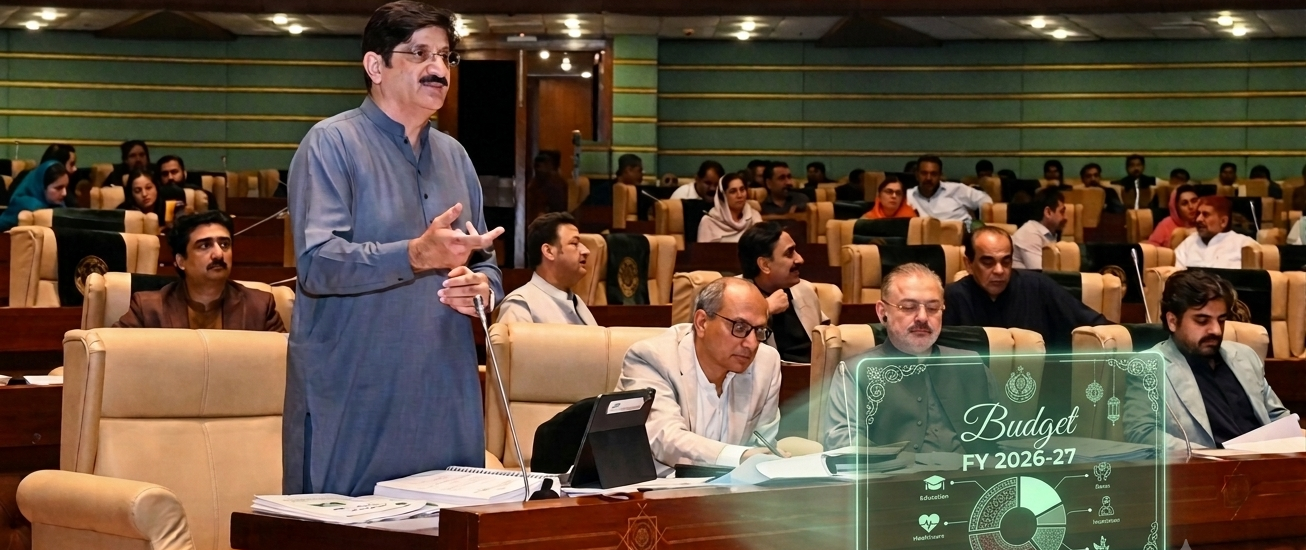
The recent Sindh Assembly Budget Session has highlighted an increasingly evident reality of Pakistan’s coalition politics: political parties can simultaneously function as governing partners, parliamentary critics, and future electoral competitors. The proceedings demonstrated that political alliances today are shaped less by ideological rigidity and more by governance, parliamentary accountability, and evolving electoral calculations.
Throughout the budget debate, the public witnessed an unusual yet politically significant phenomenon. Government allies and opposition members alike adopted confrontational rhetoric where necessary, while also leaving room for constructive engagement. Parliamentary criticism was accompanied by policy suggestions, reflecting a political environment where disagreement no longer automatically translates into complete political hostility.
This changing tone became particularly noticeable following Pakistan Peoples Party (PPP) Chairman Bilawal Bhutto Zardari’s public remarks urging the Prime Minister to exercise greater control over the federal cabinet. While those remarks primarily targeted federal governance, political observers noted that the atmosphere surrounding exchanges between PPP and MQM representatives in the Sindh Assembly also appeared comparatively restrained. Whether this shift resulted directly from Bilawal Bhutto’s intervention or from broader political calculations remains open to interpretation, but the change in parliamentary tone has been difficult to ignore.
Friendly Criticism Within Coalition Politics
Recent speeches delivered by opposition legislators, particularly MQM representatives, reflected more than routine political point-scoring. Their interventions focused extensively on administrative shortcomings, governance issues, procedural violations, and implementation failures under the provincial administration led by Chief Minister Syed Murad Ali Shah.
Importantly, many of these speeches combined criticism with policy recommendations. Rather than rejecting every government initiative outright, opposition lawmakers offered alternative administrative approaches and highlighted institutional reforms they believed would improve governance.
Such parliamentary conduct represents what may be described as “competitive cooperation”. a political environment where parties recognise their differences while simultaneously acknowledging their mutual dependence within Pakistan’s coalition framework.
The politics of consensus and criticism are no longer mutually exclusive.
Karachi’s Political Equation Continues to Evolve
Pakistan’s politics have always remained unpredictable. Governments change, alliances shift, and adversaries often become coalition partners. Yet the underlying political mechanics frequently remain remarkably consistent.
Since its emergence, MQM has occupied a unique position within Pakistan’s political landscape. Unlike many conventional political parties, its politics has historically revolved around urban representation, identity politics, and municipal governance.
Government members themselves have frequently recalled the political arrangements between PPP and MQM during the early 1990s as evidence that political necessity has repeatedly overridden ideological differences.
Although today’s political environment differs considerably from that era, certain structural realities continue to persist.
The political narratives advanced today by leaders such as Ali Khurshidi and M. Talha cannot simply be dismissed as partisan rhetoric. They continue to reflect longstanding grievances among MQM’s support base regarding representation, administrative authority, and urban governance. Equally undeniable is the reality that many MQM representatives believe the political wounds carried by their electorate have yet to heal completely.
Benazir Bhutto’s Political Assessment Still Offers Perspective
An interview conducted by renowned journalist Zahid Hussain with the late Shaheed Benazir Bhutto during the early years of MQM’s political rise provides historical context that remains relevant today.
Responding to a question about the emergence of ethnic political parties, Benazir Bhutto acknowledged that Urdu-speaking citizens had found a sense of political identity through MQM. Rather than rejecting that reality, she argued that cultural identities enrich the federation and should not be viewed as threats to national unity.
At the same time, she cautioned against allowing politics to remain permanently confined within ethnic boundaries. Her argument was that while identity politics could mobilise public sentiment, sustainable governance ultimately required broader national political engagement capable of addressing economic development, employment, resource distribution, and institutional governance.
Perhaps the most significant aspect of her remarks was not her criticism of ethnic politics itself but her belief that successful political movements eventually evolve beyond identity-based mobilisation toward broader governance responsibilities.
Whether one agrees with her conclusions or not, her observations continue to resonate within Karachi’s contemporary political environment.
Coalition Arithmetic Remains Pakistan’s Political Reality
Current media speculation continues to suggest that significant political realignments may emerge before the next general election. Various commentators have argued that Pakistan could once again witness a coalition government in which the PPP occupies a more prominent federal role.
Such scenarios remain speculative, and their eventual outcome will depend on electoral results, parliamentary arithmetic, and political negotiations.
Nevertheless, one political reality appears increasingly difficult to ignore.
Any party seeking to establish a stable government at the federal level will almost certainly require coalition partners. Within that equation, MQM continues to occupy an important parliamentary position, particularly in urban Sindh and the National Assembly.
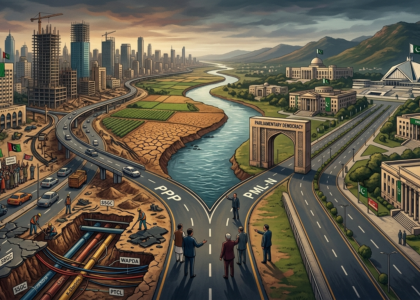
Whether PPP or PML-N ultimately leads the next federal government, neither can easily disregard MQM’s parliamentary significance.
Coalition politics has become an institutional feature of Pakistan’s democratic process rather than a temporary political arrangement.
Local Government Will Shape Future Political Strength
The forthcoming local government elections may prove even more consequential than many observers presently anticipate.
They will not merely determine municipal administrations but also measure the organisational strength of each coalition partner before the next general elections.
For PPP, governance performance in Sindh will naturally remain under public scrutiny. Administrative effectiveness, public service delivery, infrastructure management, and municipal coordination will significantly influence electoral perceptions.
Within this broader framework, the administrative responsibilities of Chief Minister Syed Murad Ali Shah, the public communication strategy overseen by Senior Minister Sharjeel Inam Memon, Faryal Talpur’s organisational role within Sindh & AJK, the coordination efforts of Syed Nasir Hussain Shah, Saeed Ghani, and Karachi Mayor Murtaza Wahab will all contribute to shaping the province’s political environment ahead of future elections.
Political management and governance performance will increasingly become inseparable.
Political Signals Beyond Public Speeches
Recent political meetings have also generated discussion among observers. President Asif Ali Zardari’s meeting with MQM Convener Khalid Maqbool Siddiqui in the presence of Federal Interior Minister Mohsin Naqvi has naturally attracted attention within political circles.
While no definitive conclusions should be drawn from individual meetings alone, such engagements reinforce the broader reality that political communication continues even during periods of public disagreement.
Coalition politics often advances quietly through dialogue while public narratives remain confrontational.
Responsible Politics Requires Controlled Rhetoric
If one reads current political developments carefully, a broader lesson begins to emerge.
Today’s political opponents may become tomorrow’s coalition partners.
Excessively personalised political confrontation may therefore reduce opportunities for future cooperation once electoral realities require coalition-building. Political disagreement remains an essential component of democracy, but preserving institutional respect ultimately benefits both government and opposition.
The Sindh Assembly’s recent proceedings suggest that constructive criticism can coexist with political competition. That may ultimately strengthen parliamentary democracy rather than weaken it.
Collective Cabinet Responsibility and The Chief Minister’s Constitutional and Political Accountability
Any administrative lapse, policy failure, or alleged violation of rules and regulations by an individual cabinet member inevitably reflects upon the leadership of Chief Minister Syed Murad Ali Shah. This responsibility becomes even more pronounced considering that Murad Ali Shah simultaneously holds the portfolio of Finance Minister, a position through which he has earned recognition for his command over Sindh’s financial management and budgetary affairs.
While individual ministers remain accountable for the performance of their respective departments, the overall administrative direction, fiscal discipline, institutional oversight, and implementation of government policy ultimately fall within the Chief Minister’s domain.
Consequently, the effectiveness or shortcomings of the provincial administration will increasingly be judged not only through the actions of individual ministers but through the leadership, supervision, and governance model established by Murad Ali Shah himself.
Rejecting Violence While Protecting Democratic Institutions
Amid ongoing political debates, one principle remains beyond partisan disagreement.
The recent targeted attack on the Rangers’ office deserves unequivocal condemnation. Statements issued by Senior Minister Syed Nasir Hussain Shah, members of the Sindh Assembly, and representatives across Pakistan’s civil and military leadership reaffirm that violence against state institutions cannot become an instrument of political expression.
Political disagreements must remain confined to constitutional institutions, parliamentary debate, and democratic processes.
Conclusion
The Sindh Budget Session may ultimately be remembered less for its budgetary allocations than for revealing the changing nature of Pakistan’s coalition politics.
Government partners criticised one another. Opposition members offered constructive proposals. Parliamentary confrontation existed alongside political pragmatism.
This is not necessarily political inconsistency—it is coalition politics adapting to Pakistan’s evolving democratic landscape.
History suggests that alliances in Pakistan are rarely permanent, but political necessity often is. The coming local government elections, evolving coalition negotiations, and governance performance across Sindh will determine whether today’s parliamentary harmony becomes tomorrow’s political partnership.
In Pakistani politics, opponents frequently become allies, criticism often precedes cooperation, and parliamentary confrontation rarely tells the complete political story.