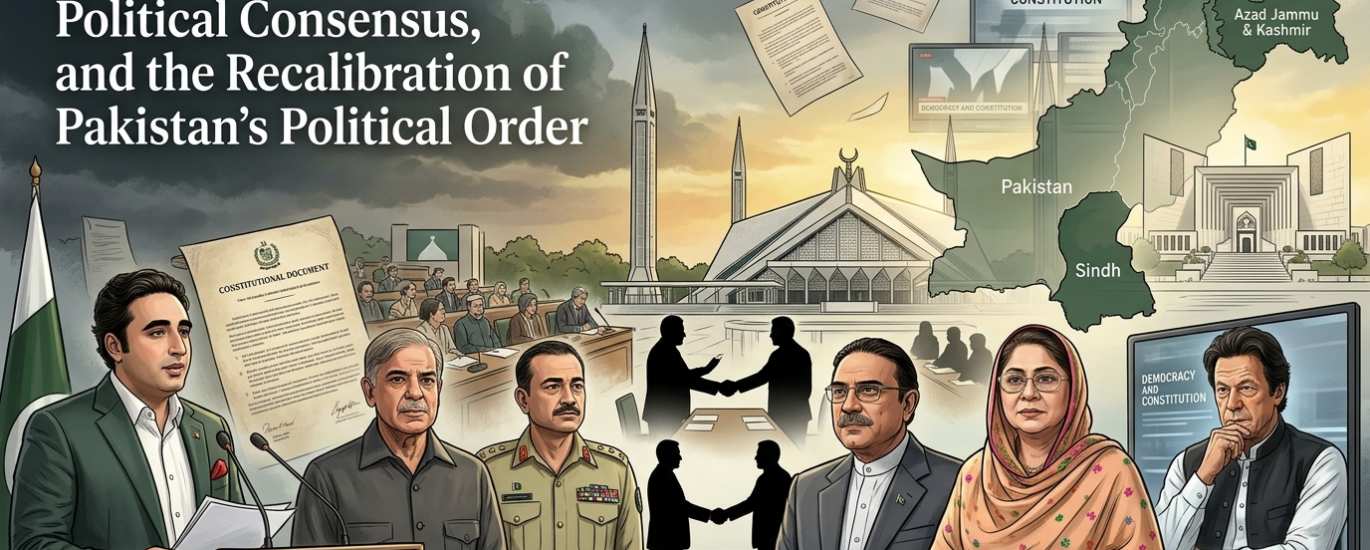
For decades, Pakistan’s political history remained imprisoned within a cycle of confrontation, engineered instability, and institutional distrust. The bitter acrimony between Pakistan Muslim League (Nawaz), Pakistan Peoples Party, and Pakistan Tehreek-e-Insaf not only weakened democratic continuity but also damaged the country’s economic confidence, diplomatic credibility, and governance structure. Political energies that should have been invested into policy, reforms, and economic recovery were instead consumed by vendettas, narratives of victimisation, institutional confrontations, and political engineering.
The consequences of this prolonged instability were visible everywhere. Governments changed, but the political culture remained unchanged. Every incoming administration attempted to politically dismantle its predecessors rather than establish institutional continuity. The economy suffered under uncertainty, investors remained hesitant, and Pakistan’s international image increasingly became associated with political chaos rather than strategic potential.
If one analyses the tenure of Pakistan Tehreek-e-Insaf, it undoubtedly succeeded in politically cornering the leadership of both the PML-N and PPP. Through aggressive political rhetoric, media mobilisation, and populist narratives, PTI managed to reshape national politics around accountability slogans and anti-status quo sentiments. Yet with time, the same political experiment revealed its contradictions. Many intellectuals once described the rise of Muttahida Qaumi Movement as a “jinn released from a bottle” by the establishment — an experiment that later transformed into a difficult political reality, particularly in Sindh. Today, many observers believe Pakistan witnessed a similar trajectory with PTI: a force facilitated into mainstream politics that eventually evolved beyond predictable political management.
However, the most important political transformation unfolding today is not merely the weakening or strengthening of any one party. Rather, it is the emergence of a broader understanding among previously hostile politicians. The same parties that once refused to politically coexist are now moving toward strategic consensus and mutual accommodation. This subtle recalibration has the potential to fundamentally alter Pakistan’s political dynamics.
For years, political forces used democratic slogans while simultaneously confronting state institutions whenever power equations shifted against them. Yet the current political arrangement has unfolded an uncomfortable but important reality: no government in Pakistan can sustainably function without institutional coordination and stable civil-military relations. The hybrid governance model, despite criticism, has demonstrated that political continuity and institutional cooperation can provide strategic stability in governance, diplomacy, and security matters.
This evolving political understanding has also exposed how much national time was wasted in the politics of revenge, imprisonments, propaganda campaigns, and manufactured polarisation. Instead of strengthening democratic culture, politicians often weakened institutions for temporary electoral gains. The current atmosphere, however, reflects a gradual recognition that political coexistence may be more beneficial than perpetual confrontation.
In this context, many observers have commended the role of the federation and military leadership, particularly Field Marshal Asim Munir, for strengthening Pakistan’s strategic and diplomatic posture during a sensitive regional environment. Whether through military diplomacy, strategic alliances, or border security, the state’s coordinated approach has projected greater institutional stability internationally.
Simultaneously, Bilawal Bhutto Zardari has emerged as a significant political figure within this evolving landscape. Although many political observers believe he missed an opportunity to continue serving as Foreign Minister, his diplomatic representation of Pakistan on international forums received recognition across political and institutional circles. Even Shehbaz Sharif publicly acknowledged Bilawal Bhutto’s communication skills and diplomatic engagement during critical international developments.
This political consensus between major stakeholders carries implications beyond coalition politics. Political stability directly influences economic confidence, foreign investment, and governance efficiency. International investors and diplomatic allies are more inclined toward engagement when political uncertainty declines. Therefore, the growing understanding among mainstream parties is increasingly being interpreted as an attempt to establish a longer-term political framework capable of preventing institutional and constitutional crises.
In this regard, discussions surrounding a possible “28th Constitutional Amendment” are gaining attention in political and intellectual circles. Many analysts believe such an amendment could institutionalise political understandings regarding democratic continuity, parliamentary cooperation, and provincial autonomy. More importantly, it may reinforce the spirit of the historic Charter of Democracy signed between PPP and PML-N, which emphasised constitutional supremacy, democratic continuity, and balanced civil-military relations.
Another important dimension of this evolving consensus is the future repositioning of Pakistan Tehreek-e-Insaf itself. The party now faces the same political realities once experienced by its rivals — legal pressures, institutional tensions, political isolation, and reputational challenges. This creates an opportunity for PTI to transition from a politics of agitation toward a politics of democratic maturity. The excessive use of social media hostility, political trolling, and character assassination deeply polarised society. A transformed PTI, with a more mature understanding of democratic coexistence, may eventually regain political space with greater institutional compatibility.
The larger question emerging from this political environment is whether Shehbaz Sharif will continue as the long-term consensus Prime Minister, or whether the coalition may eventually shift toward Bilawal Bhutto Zardari as a future national consensus candidate. With a weakened conventional opposition and increasing coordination among mainstream politicians, the next phase of politics may revolve less around survival and more around governance, diplomacy, and economic management.
Bilawal Bhutto, in particular, appears to possess a comparative advantage in diplomatic engagement and international communication. In an era where economic negotiations, strategic partnerships, and geopolitical balancing are becoming central to governance, such political characteristics may significantly influence future leadership considerations.
Another subtle but politically significant development raising questions within political circles concerns Faryal Talpur. Following reports and notifications linked with the party’s parliamentary board regarding ticket allocations for the upcoming Azad Jammu and Kashmir general elections, speculation has intensified over whether the influential stateswoman intends to retain her political focus within Sindh’s provincial politics as a Member of Provincial Assembly, or gradually shift her strategic political engagement toward Azad Jammu and Kashmir. Political observers are now debating whether this development reflects a broader and subtle strategic repositioning within the party structure, or whether it merely represents a temporary political manoeuvre designed to manage electoral optics and regional influence. Regardless of interpretation, such developments indicate that major political parties are actively recalibrating their long-term political footprints beyond traditional provincial boundaries.
Meanwhile, senior journalists and political analysts continue discussing the possibility of an expanded coalition structure based upon stronger provincial autonomy and decentralised governance. According to several political commentators, future political arrangements may provide provinces greater administrative and financial independence with minimal federal interference. Such discussions directly reconnect Pakistan’s constitutional debate with the long-standing struggle between federalism and centralization.
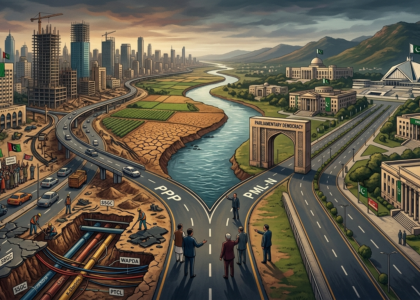
If we analyses the 18th, 26th, and 27th constitutional amendments collectively, they represent Pakistan’s continuing constitutional struggle between parliamentary supremacy and institutional oversight, judicial independence and judicial accountability, as well as federal authority and provincial autonomy. Pakistan’s constitutional evolution has consistently revolved around balancing these competing centers of power.
Interestingly, if the current national dialogue succeeds, it may also create political space for revisiting controversial provisions of the Prevention of Electronic Crimes Act, particularly clauses criticised for restricting freedom of expression and access to information. A democratic political consensus cannot remain meaningful unless accompanied by protections for media freedom, constitutional liberties, and responsible public discourse.
Simultaneously, reforms within Pakistan’s media structure have become increasingly necessary. In today’s digital environment, the distinction between journalists, political media operatives, and independent content creators has become dangerously blurred. While cyber laws apply equally to all, professional responsibilities and ethical obligations remain fundamentally different. This reality necessitates reforms within information ministries, media commissions, press bodies, and regulatory frameworks governing digital communication.
Furthermore, ongoing discussions regarding local government reforms, anti-narcotics operations, and law-and-order legislation indicate that Pakistan may be entering a broader phase of structural governance reforms. However, no reform process can succeed in an environment dominated by political instability and institutional distrust.
At the provincial level, coalition politics may also generate discomfort among existing allies. In Sindh, for example, speculation regarding administrative accommodations for Muttahida Qaumi Movement and other political stakeholders has persisted since the formation of the current provincial setup. Likewise, reports regarding possible accommodations for influential political families and opposition stakeholders continue circulating within political and journalistic circles.
Similarly, if Pakistan Tehreek-e-Insaf eventually becomes part of a broader national understanding, questions will inevitably arise regarding the political future of alliances such as Grand Democratic Alliance and other regional anti-government platforms.
Ultimately, Pakistan’s future cannot remain hostage to cycles of confrontation, engineered narratives, and political vengeance. The country now stands at a point where democratic continuity, political coexistence, institutional coordination, and constitutional stability are becoming national necessities rather than political choices. The real success of any national dialogue will not be measured merely through coalition arrangements or constitutional amendments. Its true success will depend upon whether Pakistan finally transitions from reactionary politics toward a mature democratic culture based on governance, reforms, economic revival, institutional respect, and national unity.