Constitutional Turbulence and the Return of Old Fault Lines
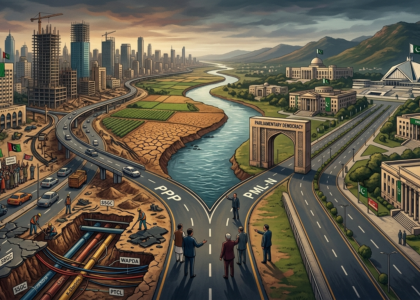
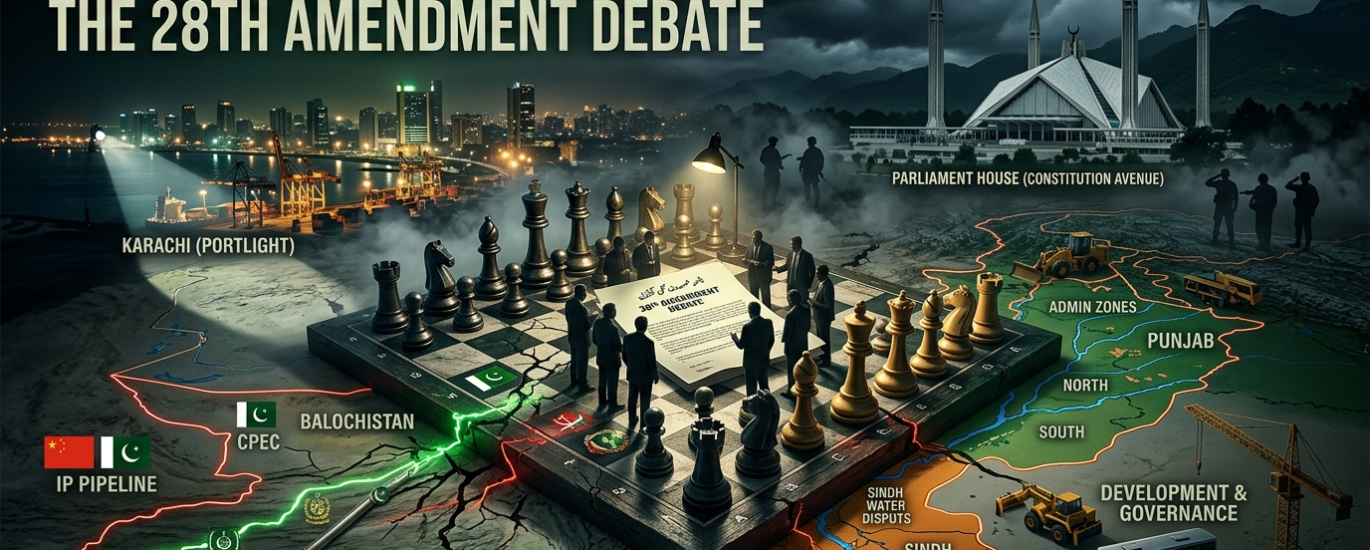
Pakistan once again finds itself standing at a fragile political crossroads, where constitutional debates, provincial anxieties, coalition compulsions, and institutional balancing acts are reshaping the country’s political chessboard. Amid intensifying discussions surrounding the proposed 28th Constitutional Amendment, every political stakeholder appears determined to secure its own space, leverage, and future bargaining power within an increasingly uncertain national landscape.
At the center of these debates lies a dangerous and familiar question: the redistribution of political and administrative authority. On one side, rhetoric surrounding the possibility of placing Karachi under greater federal control continues to circulate in political circles and media discussions. Simultaneously, the debate over creating smaller administrative units in Punjab has resurfaced, reflecting how constitutional crises in Pakistan often reopen unresolved questions of identity, representation, and resource control.
Yet beyond the political noise, the reality remains that both Sindh and Punjab’s political cadres largely reject the fragmentation of their provinces. Political workers, nationalist sentiments, and mainstream party structures in both provinces view such proposals not as reforms, but as attempts to redraw political influence under the guise of administrative efficiency. The resistance is not merely territorial; it is deeply connected with fears of weakening provincial autonomy achieved after years of constitutional struggle.
Zardari’s Slow Political Repositioning
In this evolving political climate, President Asif Ali Zardari appears to be unfolding his political cards slowly and strategically. Rather than engaging in direct confrontation, Zardari has carefully positioned himself as a statesman advocating institutional stability while simultaneously expanding the Pakistan Peoples Party’s national footprint.
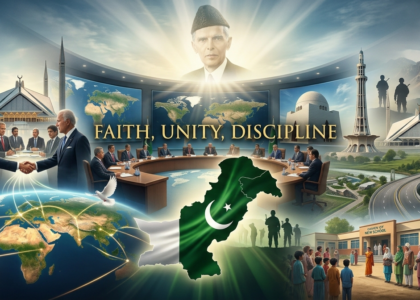
His repeated emphasis on strengthening the military while strengthening democratic institutions, promoting an agro-based economic framework, focusing on development in Balochistan, maintaining engagement with MQM, and even signaling willingness for dialogue with Pakistan Tehreek-e-Insaf collectively suggests a broader attempt to reposition PPP as a national reconciliatory force rather than merely a provincial power center.
This strategy appears calculated. Instead of aggressive political mobilization, PPP is gradually attempting to portray itself as a party capable of balancing federation, institutions, provinces, and economic governance simultaneously.
MQM: The Coalition’s Biggest Political Beneficiary
Among all coalition stakeholders, however, the clearest political beneficiary appears to be Muttahida Qaumi Movement. MQM has carefully managed to remain politically relevant by operating on multiple fronts simultaneously.
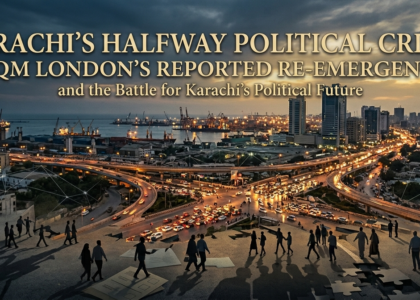
On one side, speculation continues regarding the possibility of MQM becoming a future political partner of PPP in both Sindh and the federation under an evolving political arrangement. On the other hand, MQM has aggressively pursued administrative and financial matters with the federal government, particularly the recently discussed Rs25 billion special package for Karachi and Hyderabad.
This demand is not merely developmental in nature; it is deeply political. After suffering substantial setbacks in electoral politics over the past decade, MQM appears to be rebuilding its urban political momentum through governance narratives and development-centered oculi. The package offers the party an opportunity to reconnect with urban voters through deliverables while simultaneously creating the groundwork necessary to regain political relevance ahead of future local body elections.
In many ways, the development narrative itself has become a political survival mechanism.
Sindh Government’s Administrative Approach Amid Political Chaos
While political parties continue engaging in constitutional debates and rhetorical confrontation, the Sindh government has adopted a noticeably different administrative posture. Rather than entering direct political battles over the 28th Amendment discourse, Sindh Chief Minister Murad Ali Shah has largely focused on governance continuity and development execution.
Despite relentless criticism from opposition parties in Karachi over delays in two major projects — the K-IV water project and the BRT University Road corridor — the Chief Minister has refrained from direct political confrontation.
The criticism directed toward the Transport Minister, the Local Government Minister, and Karachi’s Mayor has undoubtedly been severe. Yet the provincial government’s response has remained centered around field activity rather than media confrontation.
The public, media, and political circles have repeatedly witnessed the Chief Minister alongside Syed Nasir Hussain Shah, Sharjeel Inam Memon, and Murtaza Wahab conducting inspections and visits to ongoing development projects across Karachi.
More importantly, the awarding of the University Road project to Frontier Works Organization reflects an attempt to restore public confidence through institutional credibility. Similarly, recent meetings between Sindh government officials and World Bank representatives regarding the K-IV project indicate that despite delays and criticism, the provincial government remains committed to restoring Karachi’s infrastructure agenda.
Although the contents and minutes of those meetings remain undisclosed, the engagements themselves signal renewed administrative movement.
Water Politics and PPP’s Agro-Economic Narrative
At the same time, President Zardari’s emphasis on an agro-based economy appears increasingly aligned with the ideological and economic narrative emerging from PPP’s provincial leadership.
Nisar Ahmed Khuhro recently strongly criticized the federal government and the Indus River System Authority over the decision to impose a 27 percent water shortage on Sindh during the Kharif season. By terming the decision an “economic massacre,” PPP leadership attempted to frame the water dispute not merely as a provincial grievance, but as a threat to Pakistan’s broader agricultural economy.
Khuhro’s argument reflects a larger political and economic strategy. Sindh remains one of Pakistan’s largest agricultural contributors, producing nearly 67 percent of the country’s agricultural output and billions in export revenue. From PPP’s perspective, restricting Sindh’s water share directly undermines the very agro-economic model the party seeks to advocate nationally.
In this sense, the water dispute has evolved into both an economic and political battleground.
Jamaat-e-Islami and the Regional Energy Debate
Adding another dimension to the national political discourse, Jamaat-e-Islami reignited controversy by raising the issue of the Iran-Pakistan gas pipeline project.
Jamaat-e-Islami’s political positioning remains unique within Pakistan’s landscape, combining Islamic ideological commitments with modern governance narratives and regional strategic discourse. By revisiting the pipeline issue, the party sought to position itself within broader debates surrounding regional sovereignty, economic independence, and Pakistan’s foreign policy direction.
The move also reflects how domestic political parties are increasingly attempting to connect local political narratives with regional geopolitical developments.
Karachi’s Politics: A Continuous Cycle of Blame
Viewed collectively, Pakistan’s political environment today resembles a continuous cycle of competing narratives and mutual accusations.
PPP attempts to present itself as a party capable of governing both Sindh and the federation. MQM opposes the provincial government while simultaneously negotiating administrative benefits from the federation. Jamaat-e-Islami criticizes both MQM and PPP, while the provincial government counters opposition criticism through increasingly aggressive rhetoric inside assembly sessions.
Recent remarks from Sindh’s senior leadership, including accusations that opposition members “fuel the fire and spark the matchstick,” alongside controversial statements from the Local Government Minister targeting MQM lawmakers, reflect how deeply confrontational political discourse has become.
Even when such remarks are later expunged from assembly records, the underlying hostility remains visible to the public. The blame game continues uninterrupted while governance and public trust remain caught in the middle.
Pakistan’s International Relevance Versus Domestic Instability
Yet while political parties continue their domestic confrontations, the federation and military establishment appear increasingly occupied with Pakistan’s international positioning.
Pakistan’s diplomatic and strategic role in regional mediation efforts involving the United States and Iran has attracted significant international attention. Simultaneously, military leadership, the Prime Minister, and the Interior Ministry have received praise for restoring a degree of Pakistan’s international relevance and strategic credibility after years of diplomatic uncertainty.
Across the Muslim world, calls for greater unity between Saudi Arabia and Iran are growing louder, particularly amid regional instability and geopolitical realignments. Iran, despite sanctions and prolonged adversity, continues to receive admiration across many political and public forums for its resilience and strategic endurance.
Within this backdrop, remarks by Donald Trump regarding Asim Munir, alongside President Zardari and Bilawal Bhutto Zardari engaging Chinese delegations over CPEC 2.0 discussions, indicate that Pakistan’s external diplomatic engagement is once again expanding.
However, the contradiction remains striking.
While Pakistan attempts to regain strategic relevance internationally, it continues to struggle internally with political distrust, constitutional uncertainty, coalition bargaining, and the absence of national consensus.
A Nation Searching for Political Consensus
The state appears active abroad but fragmented at home. Politicians continue prioritizing tactical gains over structural stability, while constitutional debates increasingly risk becoming instruments of political pressure rather than pathways toward institutional reform.
Pakistan’s greatest challenge today may not be external threats or geopolitical rivalries. It may instead be the inability of its political forces to build a unified national direction at a moment when the country urgently requires political maturity, economic clarity, and constitutional consensus.
The political chessboard is active. Every player is calculating the next move.
Yet the ultimate question remains whether this game is being played for national stability or merely for political survival.