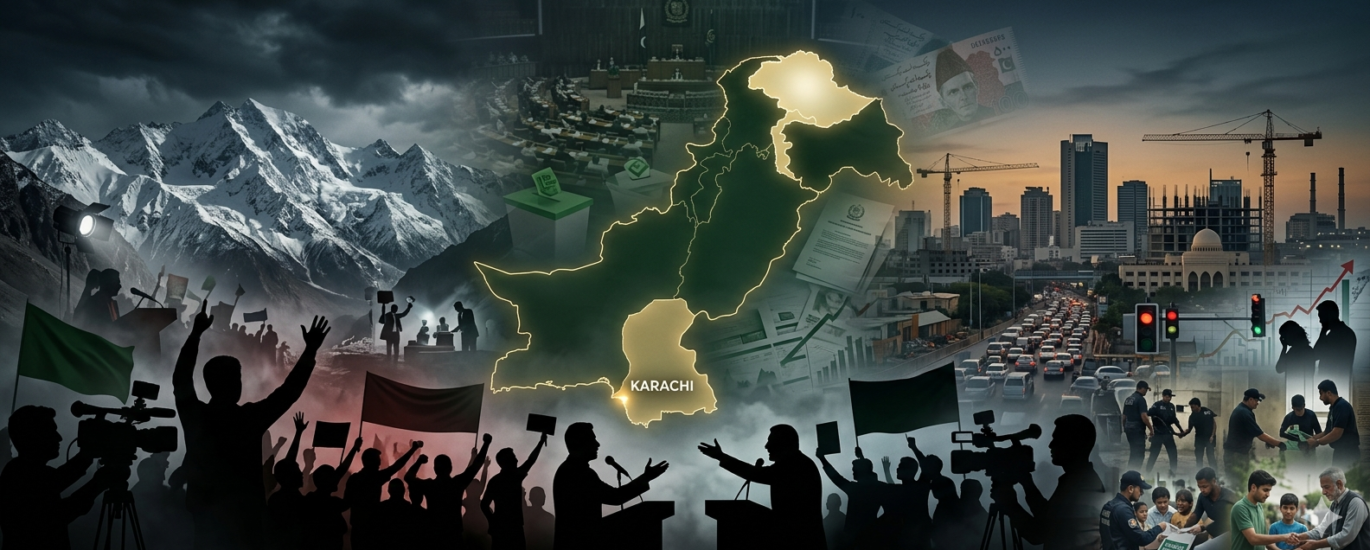
Gilgit-Baltistan Electoral Campaign Exposes Coalition Rivalries
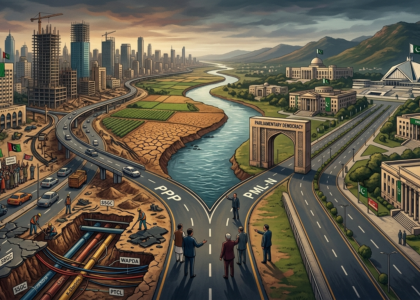
The evolving political atmosphere surrounding the Gilgit-Baltistan electoral process has once again exposed the widening cracks between the federal coalition partners. What initially appeared to be a routine electoral campaign gradually transformed into a platform for political rivalry, public criticism, and competing narratives between the Pakistan Peoples Party (PPP) and Pakistan Muslim League-Nawaz (PML-N).
Chairman PPP Bilawal Bhutto Zardari openly criticized the Punjab government during his political engagements, while PML-N leaders, including Mian Nawaz Sharif, Khawaja Saad Rafique, and Captain Safdar, responded with pointed remarks aimed at the PPP and the Sindh Government. Their speeches not only intensified the political atmosphere but also reflected the growing acrimony between the very parties currently sharing power at the federal level.
The aggressive tone adopted during the electoral campaign has raised questions regarding the long-term sustainability of the coalition arrangement. While both parties continue to cooperate within the federal structure, the rhetoric emerging from Gilgit-Baltistan portrays an alliance struggling to maintain political harmony ahead of future electoral contests.
Allegations of Bureaucratic Influence and Election Code Violations
The controversy deepened further after senior PPP leaders Shazia Marri and Sharjeel Inam Memon accused PML-N of allegedly utilizing bureaucratic machinery during the electoral process. Their criticism also highlighted concerns regarding alleged violations of the Election Commission of Pakistan’s code of conduct.
These accusations have added another dimension to the political confrontation, bringing institutional neutrality and electoral transparency into public debate. Opposition parties and political observers alike continue to monitor whether the Election Commission responds decisively to these allegations or chooses to maintain a cautious stance amid mounting political tensions.
The situation has also reinforced the perception that coalition politics in Pakistan often remains transactional rather than ideological, where cooperation at the federal level does not necessarily prevent fierce competition within provincial and regional political arenas.
Budget Delay and Debate Over the 28th Amendment
Another significant indicator of political divergence within the ruling alliance emerged through the postponement of the federal budget amid ongoing discussions regarding the proposed 28th Amendment. Although details surrounding the amendment remain unclear, the delay itself has fueled speculation regarding underlying disagreements between coalition partners.
Interestingly, several political stakeholders, including leaders from the Grand Democratic Alliance (GDA), refrained from issuing definitive comments on the amendment proposal. Their position remained cautious and conditional, emphasizing that no formal draft had yet been shared with them.
This political ambiguity demonstrates that despite public displays of unity, multiple parties within the broader political spectrum remain uncertain about the constitutional and administrative implications of the proposed amendment.
Article 140(A), Administrative Units, and Emerging Political Narratives
Meanwhile, the debate surrounding Article 140(A) and the longstanding issue of administrative decentralization continues to remain politically relevant in Sindh, Punjab, and the federal territories. The demand for empowered local governments and smaller administrative units has once again resurfaced through the narratives of several political parties.
Both Muttahida Qaumi Movement (MQM) and Jamaat-e-Islami have consistently highlighted the importance of devolving authority to grassroots institutions. Their stance reflects growing urban frustration over governance inefficiencies, particularly in Karachi.
In an unofficial conversation, GDA leader Sardar Rahim reiterated his alliance’s support for the implementation of Article 140(A) “in its true spirit.” When questioned regarding PML-F’s historical nationalist narrative alongside its pro-establishment political positioning, he stated that the party remains a patriotic and anti-PPP political force in Sindh. He further emphasized that any political bloc opposing PPP policies in Sindh would be welcomed within the Grand Democratic Alliance framework.
His remarks indicate that anti-PPP political alignment may increasingly become the unifying factor among opposition groups in Sindh, regardless of ideological differences.
Karachi Politics: Governance Versus Political Confrontation
Despite intense political criticism directed toward the Sindh Government, recent developments suggest that certain PPP leaders are attempting to prioritize governance and administrative delivery over direct political confrontation.
Sharjeel Inam Memon’s recent press conference, combined with Local Government Minister Syed Nasir Hussain Shah’s engagement with the Korangi Industrial Area leadership, portrays an effort to accelerate development projects and maintain administrative continuity amid political turbulence.
However, the notable absence of senior PPP leader Saeed Ghani during much of the political confrontation has generated considerable discussion within political circles. Observers believe this absence may reflect an intentional strategic retreat by segments of the political cadre, allowing administrative representatives to take the lead in managing the crisis.
At the same time, reports regarding reconciliation efforts between the PPP Provincial President and the Speaker of the Sindh Assembly indicate that internal political differences within the party leadership are still being addressed behind closed doors.
Anti-Narcotics Campaign Enters an Aggressive Phase
Alongside political developments, the Sindh Government’s anti-narcotics campaign has entered a more aggressive phase under the widely publicized oversight associated with Faryal Talpur’s political influence.
The issue gained further significance after the Sindh Education Minister publicly acknowledged the growing prevalence of narcotics within Karachi’s elite circles and educational institutions. His remarks reflected increasing concern regarding drug accessibility among youth and students, while also emphasizing the government’s commitment to eliminating the menace.
Public response toward the crackdown has generally remained supportive, particularly among parents and civil society groups concerned about rising addiction trends among young people.
Beyond Crackdowns: The Need for Rehabilitation and Social Inclusion
From an editorial perspective, while the anti-narcotics crackdown deserves appreciation, enforcement alone cannot permanently resolve the crisis. Sustainable solutions require institutional rehabilitation mechanisms, community engagement, and long-term social reforms.
Previous initiatives introduced during Sharjeel Inam Memon’s administrative tenure, particularly his emphasis on involving NGOs, social activists, teachers, and community stakeholders in awareness campaigns, remain relevant today. Those initiatives recognized that narcotics addiction is not solely a law enforcement issue but also a social and psychological challenge requiring collective intervention.
Sindh’s rehabilitation infrastructure, however, still remains considerably weak compared to the scale of the problem. The shortage of specialized rehabilitation centers continues to place immense pressure on families attempting to support addicted loved ones.
The provincial government must therefore move beyond symbolic crackdowns and invest in modern rehabilitation facilities, counseling mechanisms, educational awareness programs, and community partnerships. Without these structural reforms, the anti-narcotics campaign risks becoming reactive rather than transformative.
A Coalition Under Pressure
The broader political environment presently reflects a coalition government operating under visible pressure. Electoral competition, constitutional debates, administrative disputes, and internal political recalibrations are increasingly shaping Pakistan’s political landscape.
The Gilgit-Baltistan electoral process may have begun as a regional political contest, but it has ultimately revealed deeper tensions within the federal ruling structure. Simultaneously, Sindh’s evolving governance challenges, administrative debates, and anti-narcotics initiatives demonstrate that political confrontation and governance responsibilities are now unfolding side by side.
As Pakistan moves toward future electoral and constitutional milestones, the ability of political stakeholders to balance rivalry with governance may ultimately determine both institutional stability and public confidence.
Budget Expectations, Economic Anxiety, and Government Employees’ Concerns
As the federal financial budget approaches, economic uncertainty has become another major factor influencing Pakistan’s political environment. Financial experts, economists, and political observers have widely predicted that the upcoming budget is unlikely to provide significant relief either to the business community or to the salaried middle class already struggling under inflation, taxation pressure, and rising utility costs.
The business sector continues to express concerns regarding excessive taxation, declining industrial confidence, and increasing operational expenses, while salaried individuals fear further erosion of purchasing power amid persistent inflationary pressures. Public sentiment largely reflects disappointment and skepticism over whether the upcoming fiscal measures can genuinely stabilize economic conditions for ordinary citizens.
Simultaneously, attention has also shifted toward provincial governments, particularly the Sindh Government, regarding the expected salary increment for government employees. Historically, differences have often emerged between the federal and Sindh governments over salary adjustments and financial relief packages for public sector workers.
At present, non-gazette government employees in Sindh are once again expecting the provincial administration to announce meaningful relief measures in the upcoming budget cycle. Employee unions and public sector representatives argue that inflation has severely affected lower and middle-income government workers, making salary revisions and allowances essential rather than optional.
The growing expectations surrounding salary increments place additional pressure on the Sindh Government, which simultaneously faces governance challenges, political confrontation, and development expenditure responsibilities. In this context, the upcoming budget will not merely be viewed as a financial document, but also as a political test regarding the government’s ability to address public economic grievances while maintaining administrative stability.