From Diplomatic Isolation to Strategic Relevance
For years, Pakistan struggled with a deteriorating image on international platforms. Political instability, economic uncertainty, institutional confrontations, and regional security concerns had weakened Islamabad’s diplomatic posture across multiple global forums.
Questions surrounding governance, national cohesion, and strategic consistency often overshadowed Pakistan’s geopolitical importance despite its undeniable regional significance.
However, recent developments suggest a visible transformation in Pakistan’s international standing. Supporters of the current national security structure argue that the appointment of Field Marshal Asim Munir marked a turning point in restoring institutional coordination, strategic clarity, and confidence within the state apparatus.
The unprecedented level of understanding and trust between civilian leadership and military institutions created an environment where policy direction appeared more synchronized than confrontational.
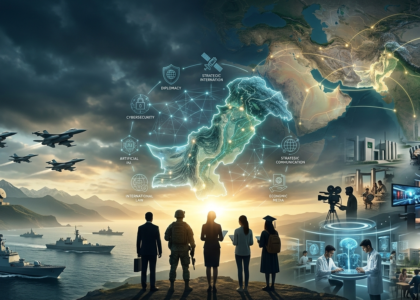
This alignment, according to many observers, strengthened Pakistan’s position both domestically and externally. On the security front, Pakistan demonstrated renewed confidence along its borders, while diplomatically, Islamabad began reclaiming space in regional negotiations and international discussions that previously seemed beyond its reach.
Civil-Military Coordination and the Restoration of State Confidence
Pakistan’s political history has repeatedly witnessed periods where tensions between civilian governments and military leadership weakened governance and projected instability abroad. In contrast, the current environment is increasingly being portrayed as one of coordination rather than confrontation.
The cooperative relationship between the ruling coalition, particularly Shehbaz Sharif’s government and the military establishment, has allowed the state to present a more unified front on matters of foreign policy, regional security, and diplomatic engagement.
Supporters of this approach believe that this institutional harmony enabled Pakistan to respond more decisively during periods of regional escalation.
Narratives surrounding “Marka-e-Haq” have been used symbolically to describe moments where Pakistan projected strategic confidence despite difficult regional circumstances. Within this framework, national cohesion became an instrument of diplomatic recovery.
The restoration of confidence was not limited to internal governance alone. Pakistan also gradually regained diplomatic visibility on international platforms where it had previously been viewed through the lens of instability or crisis management.
International Recognition and the Revival of Diplomatic Weight
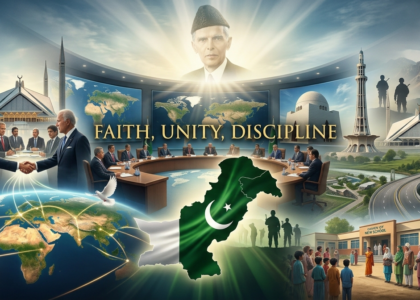
Recent positive gestures and remarks from international Political figures, including comments attributed to Donald Trump regarding Pakistan’s leadership and strategic importance, have been interpreted domestically as signs that Islamabad’s relevance is once again being acknowledged internationally.
For many in Pakistan, such developments represent more than symbolic diplomacy. They reflect the perception that Pakistan is no longer merely reacting to regional crises but is increasingly attempting to shape outcomes through mediation, dialogue, and geopolitical balancing.
This evolving diplomatic posture became particularly visible during rising tensions between Iran and the United States.
Pakistan’s Quiet Mediation Between Iran and the United States
One of the most ambitious dimensions of Pakistan’s recent diplomatic engagement has been its attempt to facilitate communication between Tehran and Washington during a period of extraordinary regional tension.
Although much of this diplomacy occurred quietly and away from media attention, Pakistan increasingly positioned itself as a bridge capable of communicating with multiple rivals simultaneously. Islamabad maintained working relations with Tehran while also preserving strategic engagement with Washington and Gulf capitals.
Pakistan’s involvement reflected a delicate balancing act. On one side stood Iran, a neighboring Muslim country with deep historical, religious, and economic connections to Pakistan. On the other stood the United States, a global power whose regional influence remains deeply intertwined with Middle Eastern security calculations.
Despite uncertainties surrounding the peace process, Pakistan’s diplomatic role gained significance because it attempted to preserve communication during moments when direct engagement between the two countries became nearly impossible.
A Fragile Peace Process Still in Motion
The Iran-US peace process remains incomplete and uncertain. Negotiations continue largely through indirect channels, ceasefire understandings remain vulnerable to regional developments, and the possibility of military escalation continues to threaten diplomatic progress.
Yet even amid these uncertainties, Pakistan’s role has become increasingly relevant in sustaining communication during one of the most unpredictable stages in the modern Middle East.
Whether Islamabad’s mediation eventually contributes to a durable breakthrough or merely helps prevent a broader regional conflict, Pakistan’s diplomatic engagement has already elevated its strategic relevance within regional geopolitical discussions.
The importance of this role lies not only in diplomacy itself but in the message it sends: Pakistan is attempting to emerge not as a participant in regional divisions, but as an architect of stability.
The Islamic Dimension of Pakistan’s Strategic Mindset
Within Pakistan, many citizens also interpret national security and military doctrine through an Islamic historical lens. There exists a deeply rooted belief among sections of society that Pakistan’s armed forces are not merely trained for conventional warfare, but are inspired by principles associated with sacrifice, resilience, discipline, and faith drawn from Islamic history.
This perspective often recalls how Muslim civilizations throughout history fought under difficult circumstances yet prevailed through unity, conviction, and perseverance. For supporters of this narrative, Pakistan’s security establishment reflects not only military preparedness but also a continuation of a broader civilizational responsibility toward the Muslim world.
Such sentiments become particularly powerful during stages of regional conflict involving Muslim nations.
The Muslim World and the Persistence of Division
Despite shared history, faith, and collective geopolitical interests, divisions among Muslim countries continue to define regional politics. Sectarian differences, strategic rivalries, economic competition, and external alliances repeatedly undermine the possibility of a united Muslim geopolitical framework.
Recent regional developments once again exposed these fissures visibly. The Iran-US tensions indirectly highlighted varying positions across Muslim capitals, revealing how competing national interests often override broader calls for Muslim unity.
In contrast, Pakistan presents itself domestically as a country where ethnic, linguistic, and cultural diversity coexist within a broader national framework.
Punjabis, Sindhis, Baloch, Pashtuns, Muhajirs, and numerous other communities continue to live under one constitutional structure despite political disagreements and historical complexities.
This internal diversity is often viewed as evidence that coexistence within the Muslim world remains possible if political leadership prioritizes harmony over division.
Pakistan’s Responsibility as an Islamic Republic
As the Islamic Republic of Pakistan, the country carries a unique symbolic responsibility within the Muslim world. Beyond geopolitical calculations, there exists an ideological expectation that Pakistan should actively encourage dialogue, reconciliation, and unity among Muslim nations.
Many Pakistanis, particularly those emotionally connected with Ahl-e-Bait traditions and broader Islamic solidarity, continue to pray for the success of ongoing peace efforts between Iran and the United States because regional stability directly impacts the Muslim world as a whole.
However, even if negotiations ultimately fail, Pakistan’s broader responsibility remains unchanged.
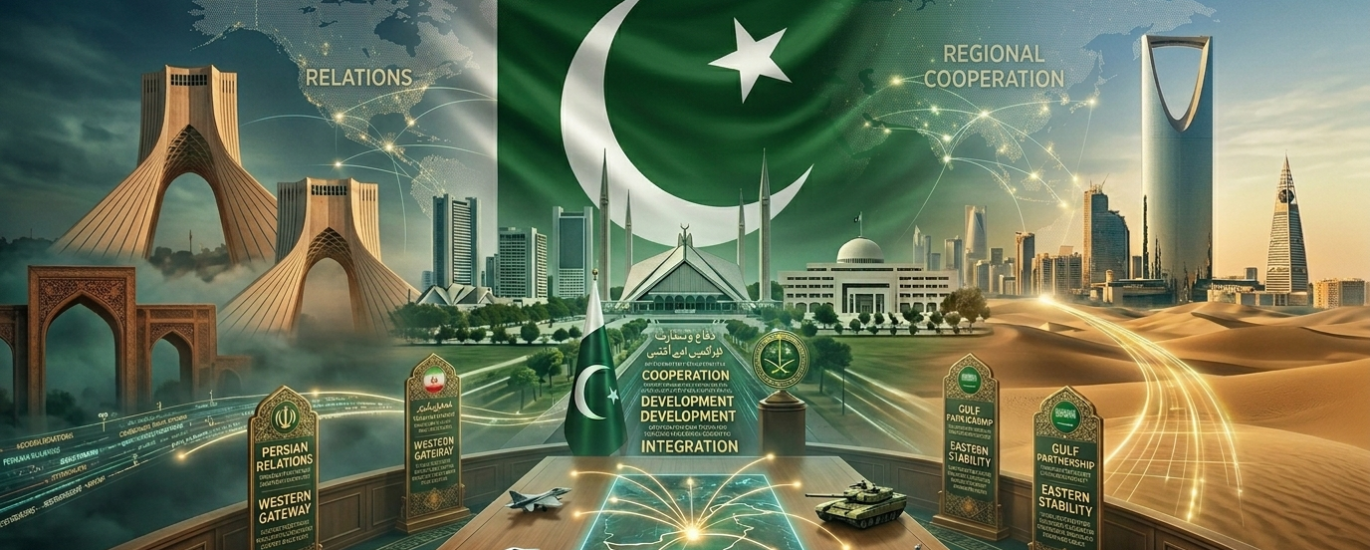
Islamabad must continue striving to gather Muslim countries under one platform, encouraging diplomatic engagement. In particular, Pakistan can continue playing a constructive mediatory role between Saudi Arabia and Iran, whose relationship significantly shapes the political direction of the Middle East.
Political Leadership and Regional Relationships
Pakistan’s current political leadership also possesses longstanding diplomatic relationships with both Tehran and Riyadh.
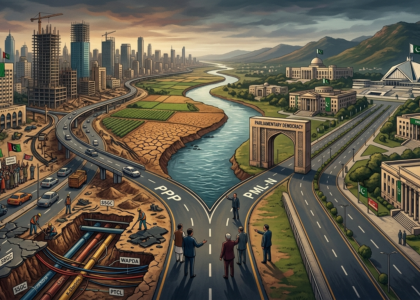
The leadership of the Pakistan Peoples Party, including Asif Ali Zardari and Bilawal Bhutto Zardari, has repeatedly engaged with the Iranian leadership through official visits and diplomatic exchanges. Representatives from Sindh have also participated in multiple engagements aimed at strengthening bilateral cooperation with Tehran.
Simultaneously, the historical relationship between the Pakistan Muslim League (N) leadership and Saudi Arabia’s ruling establishment has remained well known within regional diplomatic circles.
These parallel relationships provide Pakistan with a rare diplomatic advantage: the ability to maintain communication with competing regional powers without appearing entirely aligned against either side.
Harmony at Home, Stability Abroad
Pakistan today stands at an important intersection. The same political harmony and institutional coordination that strengthened national stability internally could potentially serve as a model for Pakistan’s external diplomatic conduct.
If cooperation between political institutions and state organs continues domestically, Islamabad may increasingly position itself as a credible advocate for dialogue across the Muslim world.
At a time when the Middle East remains vulnerable to conflict, sectarian polarization, and geopolitical fragmentation, Pakistan possesses both the strategic location and diplomatic relationships necessary to encourage communication between divided powers.
The challenge, however, will be sustaining balance without becoming surrounded by competing regional blocs.
Ultimately, Pakistan’s greatest diplomatic strength may not lie in military power alone, but in its ability to act as a bridge between East and West, between Iran and Saudi Arabia, perhaps most importantly, between divided Muslim nations searching for common ground in the world.