A Province at the Center of National Political Realignment
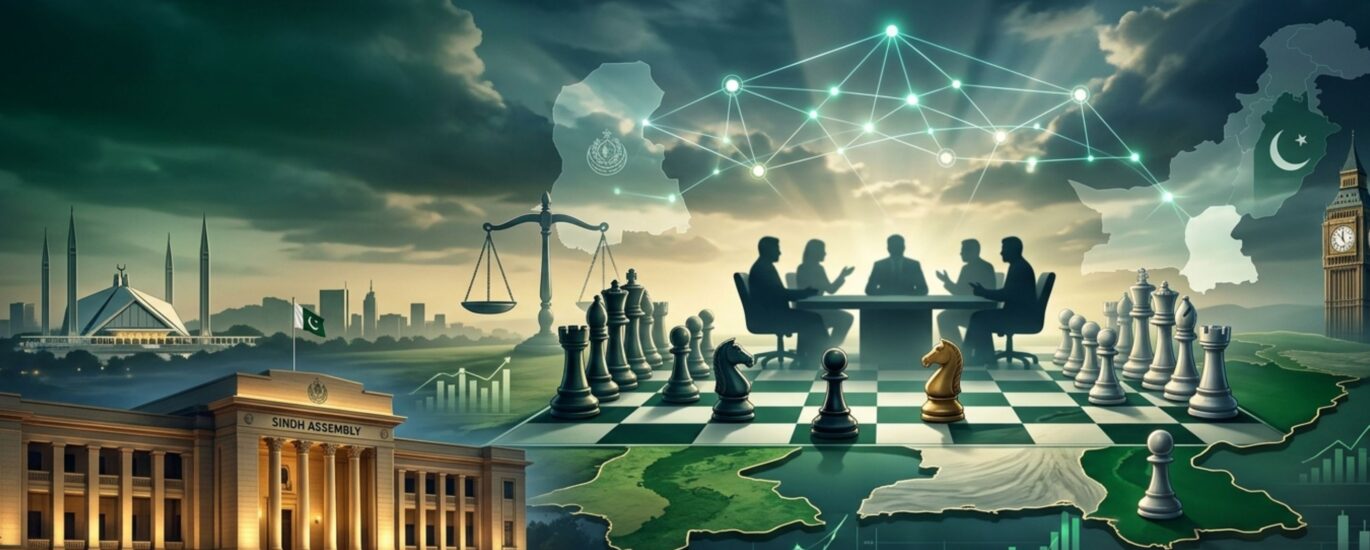
Pakistan’s political landscape appears to be entering another phase of recalibration, with Sindh increasingly becoming the focal point of evolving power dynamics between provincial stakeholders, federal institutions, and the broader national establishment. Amid growing political uncertainty and intensifying rhetoric from major political players, signs suggest that the Pakistan Peoples Party (PPP) is preparing itself for a larger role in the federation while simultaneously reassessing its governance and political strategy within Sindh.
Recent political developments indicate that the PPP leadership is no longer operating solely through the traditional framework of reconciliation politics. Instead, the party appears determined to strengthen its bargaining position both in Islamabad and across the provinces. This shift is taking place at a time when reports and political speculation continue to suggest potential changes in the federal political structure as well as within Sindh’s administrative setup.
Bilawal Bhutto’s Hardening Political Narrative
The statements emerging from PPP Chairman Bilawal Bhutto Zardari have reflected a noticeably firmer tone toward ongoing political disputes. Rather than signaling compromise, the party leadership has consistently emphasized resistance against what it perceives as political encroachments on constitutional and democratic principles.
The controversy surrounding discussions related to constitutional amendments, combined with allegations regarding violations of the Election Commission’s code of conduct during the Gilgit-Baltistan electoral process, has further reinforced the PPP’s position that it requires greater political leverage at the federal level. For the party, these developments are not merely constitutional questions; they represent a broader struggle over political influence and institutional balance.
The remarks of party leaders and provincial office-bearers before and after Bilawal’s statements suggest that the PPP may already be engaged in a gradual transformation of its political and governance strategy. The objective appears to be the strengthening of the party’s negotiating capacity while preparing for future electoral and constitutional contests.
The Significance of Faryal Talpur’s Political Role
The reported involvement of Faryal Talpur in the context of Azad Jammu and Kashmir’s electoral politics carries implications beyond a routine political assignment. Within PPP circles, such decisions are often interpreted as indicators of broader strategic thinking by the party leadership.
Her active role signals that the PPP is not limiting its focus to Sindh alone but is seeking to maintain influence across multiple political stages. The move reflects a party leadership conscious of future electoral alignments and determined to preserve organizational strength nationwide.
Cooperation and Competition Within the Power Structure
One of the most intriguing aspects of contemporary politics is the apparent coexistence of cooperation and competition among key stakeholders.
On one side, observers point toward growing coordination among Field Marshal Asim Munir, Interior Minister Mohsin Naqvi, and Sindh’s senior minister Sharjeel Inam Memon on several governance and administrative matters.
On the other side, President Asif Ali Zardari continues to advocate an economic vision centered on agricultural modernization, regional development, and strategic investment, particularly in underdeveloped regions such as Balochistan. The emphasis on economic integration, infrastructure expansion, and security cooperation has created an impression among many political observers that significant segments of the PPP leadership and state institutions remain aligned on broader national objectives.
Yet, despite these areas of convergence, provincial leaders have increasingly signaled that Sindh’s interests will not be compromised merely for the continuation of political accommodation. This evolving position suggests that the PPP seeks partnership where possible, but political confrontation where necessary.
The Murad Ali Shah Question
This month marks a significant political milestone for Chief Minister Syed Murad Ali Shah, who has completed a decade in office. Few chief ministers in Pakistan’s history have maintained such administrative continuity.
Nevertheless, speculation regarding his future remains persistent. Critics continue to question governance outcomes, while supporters point to his role in maintaining administrative stability and financial discipline. Murad Ali Shah himself has repeatedly dismissed rumors regarding conspiracies against his government, maintaining that such efforts will ultimately fail.
His recent remarks referencing the phrase “Ghanta Baj Gaya” generated considerable political discussion. While interpreted differently by various observers, the statement highlighted the intensity of ongoing political speculation surrounding Sindh’s future leadership.
Historically, discussions regarding the replacement of a chief minister often emerge during periods of negotiation between political leadership and influential national stakeholders. The current environment appears no different.
Sharjeel Inam Memon: The Leading Contender?
Among the names frequently mentioned in discussions regarding Sindh’s future political leadership, Sharjeel Inam Memon consistently appears near the top of the list.
His growing visibility within the party, active role in governance, and reportedly constructive relationships across multiple centers of influence have led many political analysts to view him as a strong contender for higher office.
Should a leadership transition eventually occur?
While no formal decision appears imminent, the perception that Sharjeel enjoys confidence within both party and institutional circles continues to fuel speculation regarding Sindh’s political future.
The Financial Legacy of Murad Ali Shah
Despite recurring rumors regarding administrative changes, even critics acknowledge that replacing Murad Ali Shah would not be straightforward.
Over the years, he has developed a reputation as one of the PPP’s most experienced financial managers. His stewardship of Sindh’s finances during periods of economic uncertainty has earned him recognition across political lines.
Many within the party believe that his willingness to balance fiscal management with internal political accommodation has simultaneously been his greatest strength and his greatest challenge. Maintaining cohesion within a diverse political structure often requires compromises that expose leaders to criticism from multiple directions.
Media Voices and the Provincial Rights Narrative
Recent public discussions have highlighted another important dimension of Sindh’s politics: the growing convergence between sections of civil society, media stakeholders, and advocates of provincial autonomy.
Comments by Fazil Jamili and senior journalist Mazhar Abbas during a seminar organized by the PPP’s student wing attracted attention because they combined criticism of governance shortcomings with broader concerns regarding provincial rights and federal-provincial relations.
Their observations reflected a perspective increasingly visible within political discourse, that criticism of governance does not necessarily translate into opposition to provincial autonomy. In many cases, both debates are occurring simultaneously.
Cabinet Reshuffles and the Politics of Negotiation
Adding further intrigue to the current political environment are recent discussions by senior journalist Rafiq Bhutto regarding potential federal and provincial cabinet reshuffles.
Such discussions reinforce the perception that political negotiations remain active behind the scenes. While criticism of governance and corruption continues to feature prominently in public discourse, the broader narrative increasingly revolves around political positioning, institutional coordination, and the search for a sustainable power arrangement.
The role of Mohsin Naqvi is particularly noteworthy in this context. Many political observers view him as an important intermediary capable of facilitating dialogue between the PPP leadership and the national security establishment at a time when political consensus remains essential for stability.
Conclusion: Negotiation Before Transformation
The recurring speculation surrounding Sindh’s chief minister, cabinet restructuring, and federal-provincial relations should not be viewed in isolation. Rather, they appear to be components of a larger political negotiation unfolding across multiple levels of the state.
Whether these discussions ultimately result in leadership changes, new alliances, or a recalibrated power-sharing arrangement remains uncertain. What appears increasingly clear, however, is that the PPP is seeking a stronger position in the federation while simultaneously redefining its political strategy within Sindh.
If history serves as a guide, the decisive moment will not arrive through public statements or political slogans. It will emerge when Islamabad, the PPP leadership, and key state institutions reach a mutually acceptable understanding regarding the future direction of governance and political stability. When that consensus finally materializes, the political clocks that currently appear out of sync may indeed begin ringing together.